A Personal Reflection
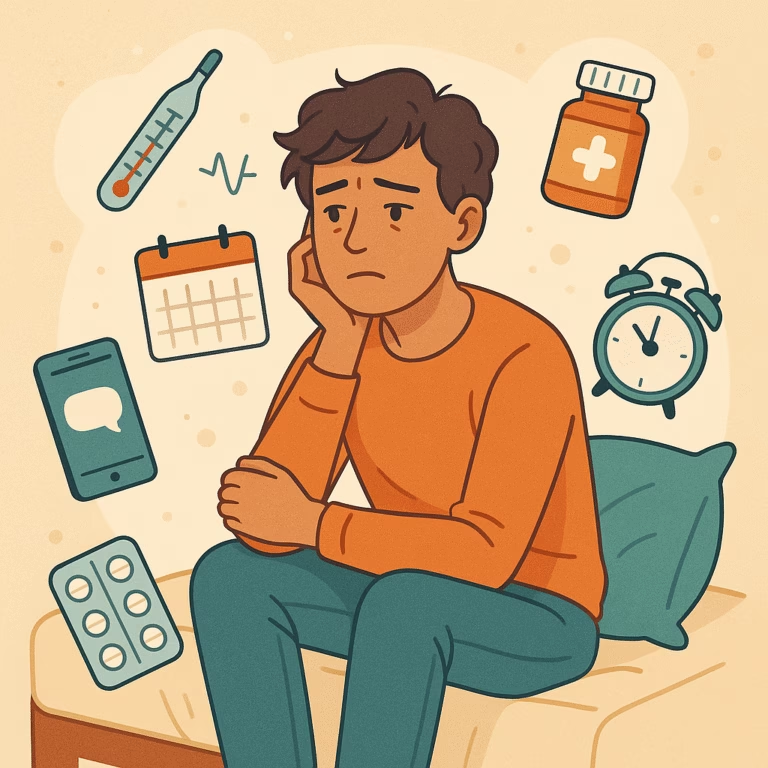
A week ago, I felt unwell — unwell enough to go straight to bed in the middle of the day. Now, that’s not entirely unusual for me; sometimes I’ll sneak off for a cheeky nap or a quick recharge away from the kids. But this time was different. I wasn’t just tired — I was properly ill.
That’s when things got interesting. I wasn’t raised to make a fuss about health. In my childhood home, illness wasn’t something you stopped for; life didn’t wait, so neither could you. You just carried on.
Self-care wasn’t really part of our vocabulary. When I had my appendix removed, my mother left the infected wound to “heal on its own.” When I broke fingers on both hands, I walked around for two weeks before anyone thought to get an X-ray.
So it’s hardly surprising that when I woke up from that three-hour daytime nap — dizzy, unsteady, the room spinning like I was drunk — it still didn’t cross my mind to call for help. I was just going to “wait it out.”
It took my wife noticing that I wasn’t myself to insist on calling the doctor. The doctor then insisted on calling an ambulance.
Thankfully, the NHS took excellent care of me. After a short stay in A&E, I was home and on the mend. But — in true ADHD fashion — I couldn’t sit still for long. I was soon back to painting walls and finishing DIY projects (you’ll read about that in “DIY on an ADHD Budget,” coming soon).
And then, predictably, it happened again. Another dizzy spell, another ambulance, another reminder that “I’ll be fine” isn’t always true. This time, I ended up in the Stroke Ward — again receiving incredible care — but also reflecting on a question that’s been sitting with me ever since:
Does ADHD make it harder for us to recognise when we need medical help — big or small?
Research says yes. And my experience seems to prove it.
When ADHD Meets Self-Care
ADHD doesn’t just affect attention or productivity — it influences how we recognise, interpret, and act on physical and emotional cues.
For many of us, self-care isn’t instinctive. It’s a skill we have to learn. Tasks like noticing symptoms, assessing whether they’re serious, deciding to seek care, booking appointments, and following up all rely on executive functions — the very areas ADHD makes trickier.
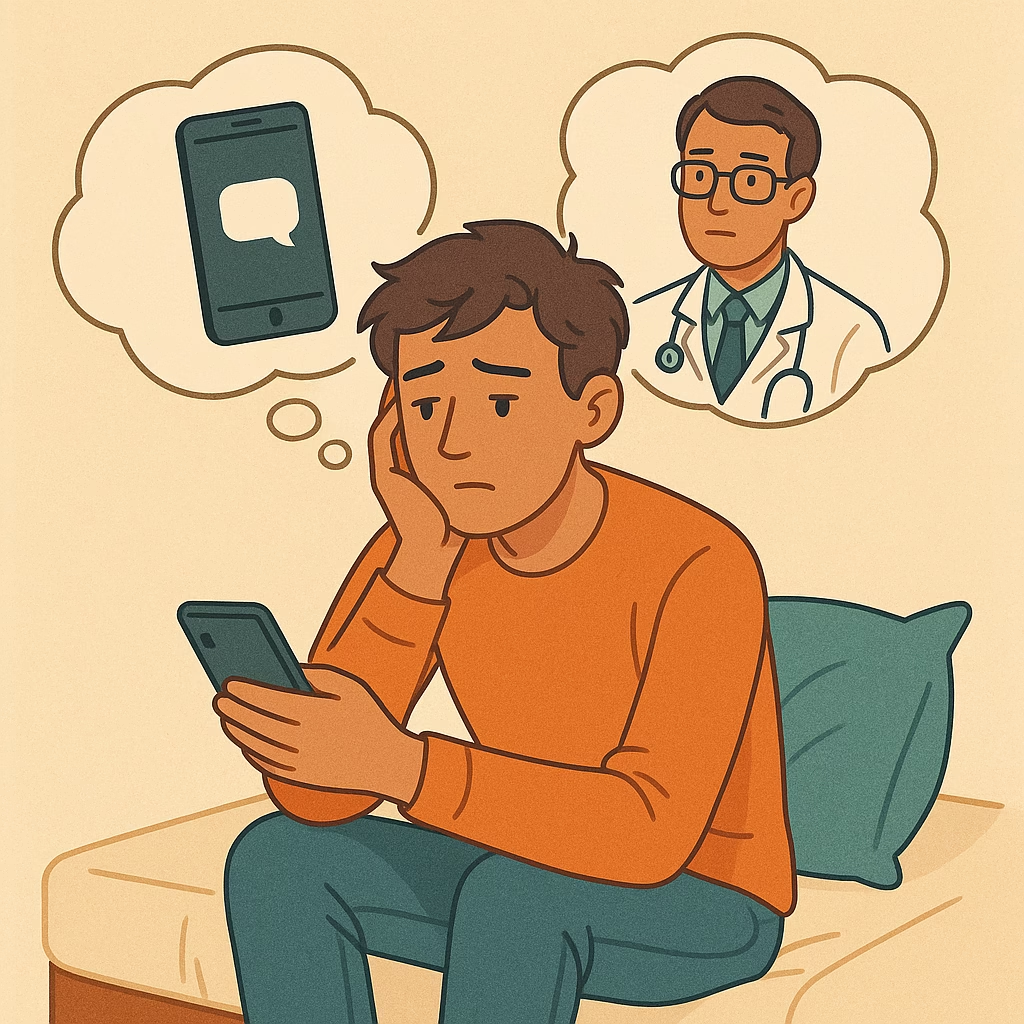
So even when the signs are obvious — dizziness, pain, exhaustion — the brain may struggle to connect “I feel bad” with “I should do something about this.”
Why People with ADHD Often Delay Medical Care
1. Executive-Function Barriers
ADHD makes it harder to plan, prioritise, and follow through. You might intend to call the GP but get distracted by a dozen other things. You might mean to rest but start “just finishing one small job.”
2. Self-Regulation and Interoception
Many of us have difficulty interpreting internal signals (known as interoceptive awareness). We miss early warning signs — fatigue, dizziness, changes in appetite — until they become severe.
3. Upbringing and Conditioning
If you grew up in an environment where illness was ignored or dismissed, you may have internalised the message that seeking help is weakness or “making a fuss.” For ADHD adults already battling self-criticism, this belief can stick hard.
4. Healthcare Systems That Aren’t ADHD-Friendly
Complex booking systems, long waits, unclear instructions — these create friction that ADHD brains are especially sensitive to. Each extra step adds an opportunity to give up or forget.
5. The Paradox of Resilience
People with ADHD are often used to pushing through discomfort, whether emotional or physical. That grit is a strength — but it can also mean ignoring symptoms that genuinely need medical attention.
What the Research Tells Us
Recent studies show that adults with ADHD are more likely to have physical health problems such as obesity, asthma, diabetes, and hypertension. Researchers suggest this may relate to difficulties in behavioural self-regulation — the same mechanisms behind late-night snacking, sleep irregularity, and missed medication.
A 2022 review in BMC Psychiatry found that improving ADHD management may reduce such risks. Another 2023 systematic review highlighted that effective self-care for ADHD adults depends on external structure — routines, reminders, and supportive relationships.
Healthcare professionals echo this. Many report that ADHD adults often delay care or under-report symptoms, not out of neglect but because of executive overload or past negative experiences.
Practical ADHD-Friendly Self-Care Strategies
Simplify the “When to Call” Decision
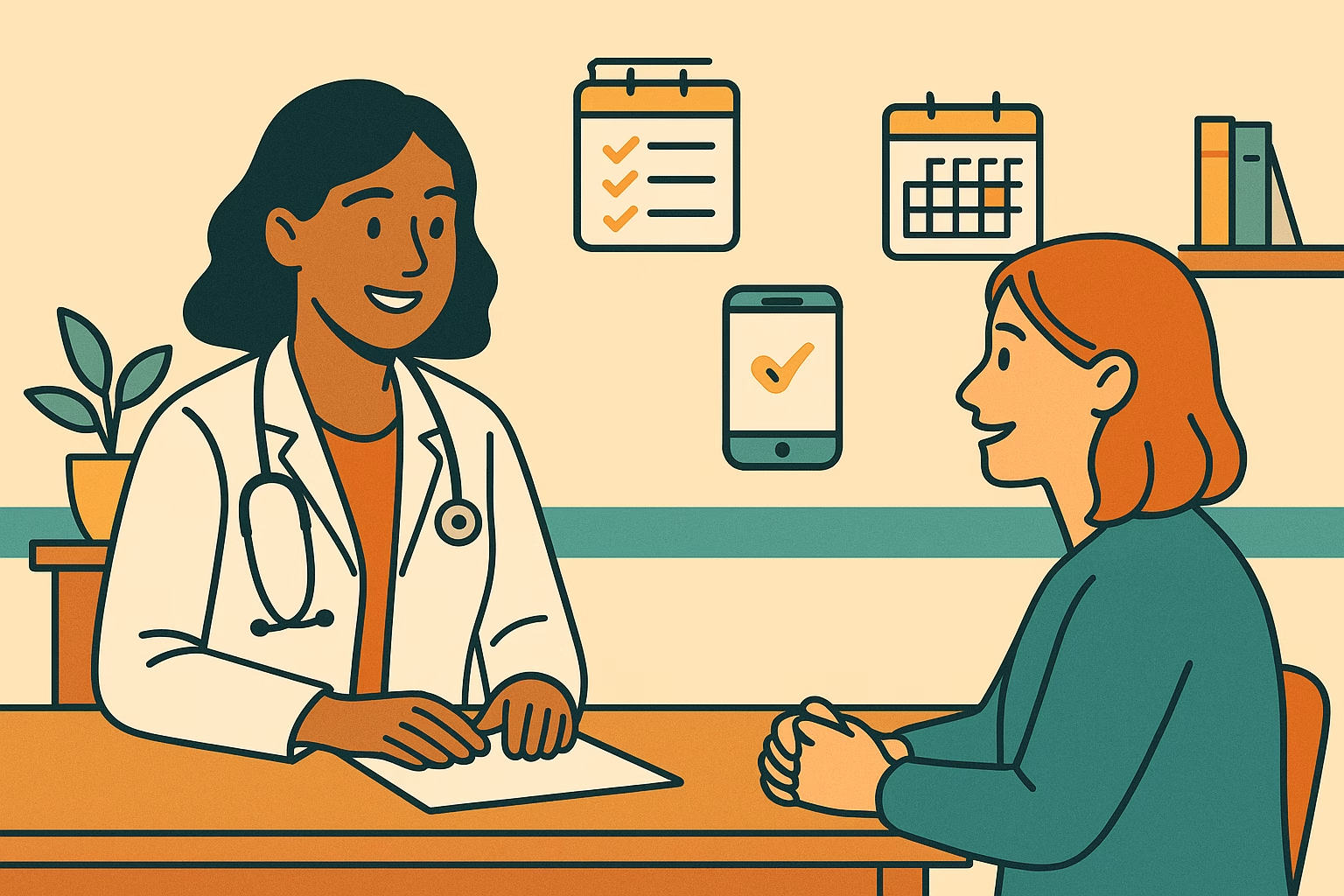
Write a short list of clear triggers that mean you always seek help.
Example: “Fever lasting more than two days,” “Sudden dizziness or pain,” or “New weakness or speech change.”
Make Access Easy
Save your GP’s number and online booking link in your favourites. Name it “Doctor – Use When Unwell.” Frictionless access helps bypass hesitation.
Outsource Accountability
Ask a partner, friend, or coach to check in if you mention feeling off. A gentle “Have you called the GP yet?” can be life-saving.
Track and Review
Keep a short note in your phone or journal after appointments — what was said, what’s next, when to follow up. Then set reminders.
Normalise Rest
Remind yourself: recovery is productive. Healing keeps you capable of showing up later.
For Coaches and Professionals
When working with ADHD clients, remember that delayed help-seeking isn’t a lack of care — it’s a reflection of neurological and learned barriers.
Encourage reflection:
- How do you know when your body needs help?
- What stops you from acting on it?
- What systems or people can help you follow through?
Frame self-care as self-respect, not self-indulgence. Small systems — symptom logs, reminder apps, or pre-agreed thresholds for “time to call” — can bridge the gap between intention and action.
The Takeaway
ADHD doesn’t just shape how we think — it shapes how we care for ourselves.
Growing up without a culture of self-care, combined with ADHD’s executive challenges, can make recognising illness or seeking help harder than it should be.
But awareness is powerful. With structure, support, and a shift in mindset, we can learn to treat our health not as an interruption, but as an essential part of living well.